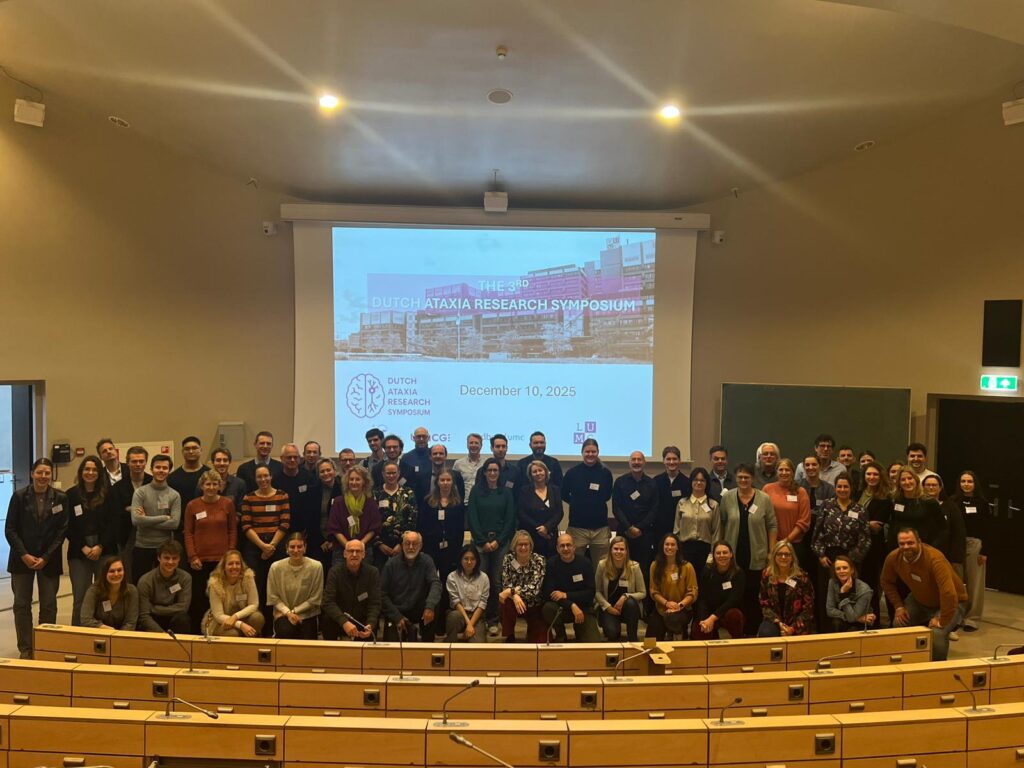
The third Dutch Ataxia Research Symposium (DARS) took place on December 10th, 2025, at the Leiden University Medical Center (LUMC). The meeting brought together researchers, clinicians, and patient representatives to discuss recent advances in the genetics, pathophysiology, and therapeutic development of cerebellar ataxias. The atmosphere reflected a highly collaborative research community with strong integration of clinical and fundamental science.
The symposium opened with a dedicated patient–researcher dialogue where Ronald Buijsen underscored the importance of communication and active patient engagement.
The keynote lecture, delivered by David Pellerin, focused on SCA27B. He provided an overview of the genetic basis of this recently recognized form of ataxia, described the associated clinical spectrum, and discussed the underlying molecular mechanisms. His presentation illustrated how the characterization of emerging ataxia subtypes contributes to a broader understanding of cerebellar function and disease pathways.
The first scientific session addressed therapeutic innovation with an emphasis on antisense oligonucleotide (ASO) strategies. In this session Linde Bouwman showed her work on an allele-specific ASO approach for SCA7. Altogether, this session reflected the increasing maturity of translational ataxia research and the growing feasibility of precision-medicine approaches.
Clinical research was the focus of the second session. New findings from a Dutch SCA1 natural history study provided important trial-readiness insights that will guide the design of future interventional studies. Complementary to this, clinical, electrophysiological, and imaging data were integrated to characterize the peripheral nervous system involvement observed in SCA3, underscoring the multisystemic nature of this disorder.
The final session concentrated on molecular mechanisms and advanced genomic technologies. Discussions covered the identification of new ataxia-associated genes, the use of long-read sequencing to resolve genetically unsolved cases, and network-analytic approaches that may reveal novel diagnostic or therapeutic targets. The symposium concluded with an overview of the CureQ consortium’s efforts to predict, slow, and ultimately treat polyglutamine disorders through large-scale collaborative research.
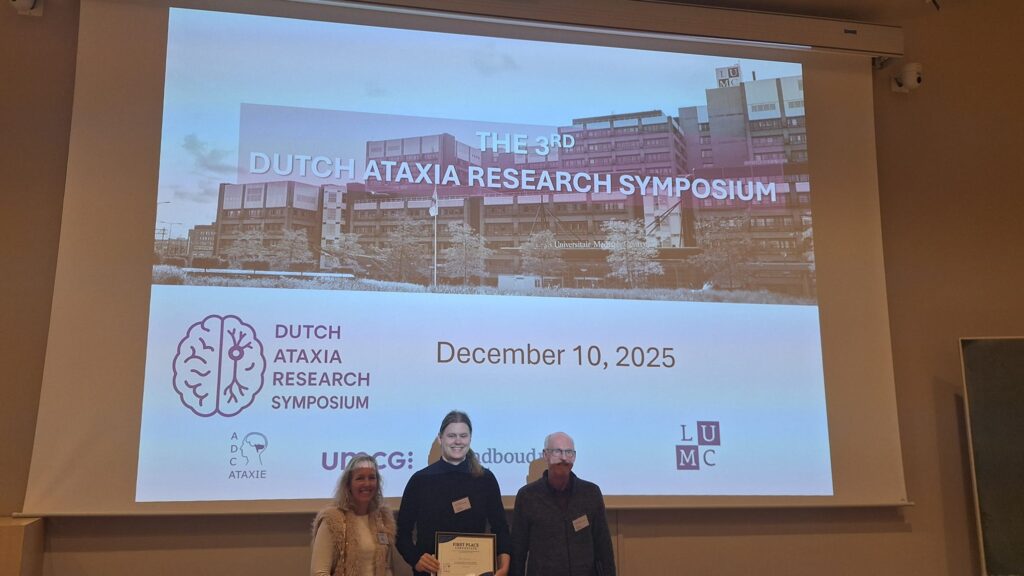
Finally, a prize for best poster was awarded to Bas Röttgering and the symposium was concluded with networking drinks. Overall, DARS 2025 reflected a rapidly evolving field that is steadily moving toward disease-modifying interventions.